
Importance of Traditional Plantation for Biodiversity Development in India: A Comparison with the Miyawaki Forest Technique
India is one of the world’s richest biodiversity regions, hosting nearly 8% of the world’s known biodiversity while occupying only about 2.4% of the global land area. However, increasing urbanisation, land degradation, deforestation, and climate change have placed immense pressure on natural ecosystems. In this context, plantation initiatives are increasingly recognized as an important strategy for ecological restoration and biodiversity conservation. As a more than two and half decades old non-profit philanthropy organisation vast experienced Team.Drishti Foundation has been actively engaged in environmental conservation initiatives including river rejuvenation, biodiversity protection, tree plantation, and ecosystem restoration across India. Understanding the ecological importance of traditional plantation systems in comparison with modern approaches such as the Miyawaki technique is critical for shaping sustainable environmental strategies.
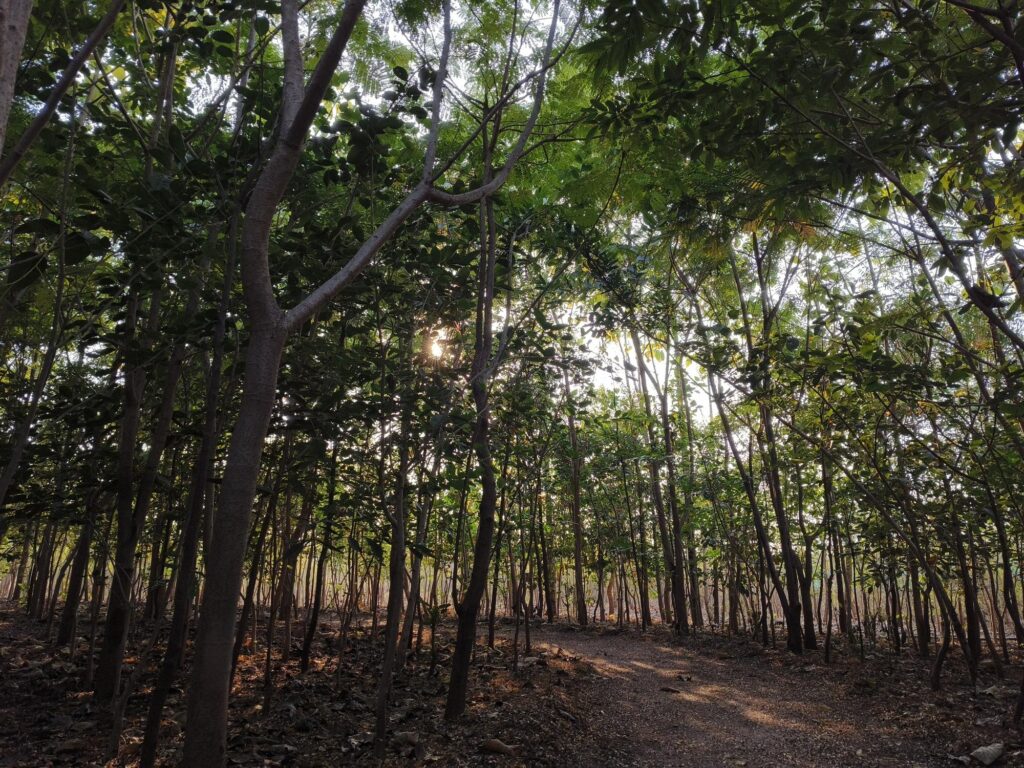
Plantation practices in India have evolved through centuries of community interaction with nature. Historically, traditional plantation systems were embedded within rural landscapes, sacred groves, agricultural systems, and water bodies. Indigenous communities maintained diverse tree species around farms, riverbanks, and village commons to enhance soil fertility, protect water sources, and support biodiversity. Species such as neem, peepal, banyan, arjun, jamun, bamboo, and tamarind were commonly planted because of their ecological resilience and multiple benefits for local communities. These systems contributed to complex ecological networks that supported birds, pollinators, insects, and wildlife while improving soil health and water retention. Such practices demonstrate how traditional ecological knowledge played a vital role in sustaining India’s natural ecosystems.
From a scientific perspective, traditional plantation systems align closely with the principles of natural ecological succession and ecosystem stability. Native tree species adapt naturally to local climatic and soil conditions and develop gradually through layered vegetation structures consisting of canopy trees, understory shrubs, grasses, and microbial communities. This structural diversity creates habitats for numerous species and enhances ecosystem resilience. According to the Food and Agriculture Organization (FAO) and global biodiversity studies, forests and natural ecosystems support nearly 80% of terrestrial biodiversity, highlighting the importance of diverse plantations that mimic natural forests. Traditional plantations also enhance soil microbial activity, improve groundwater recharge, and contribute to long-term carbon sequestration, making them an effective nature-based solution for climate change mitigation.
In contrast, the Miyawaki plantation technique, developed by Japanese botanist Dr. Akira Miyawaki, represents a modern approach to afforestation designed primarily for degraded or urban landscapes. The method involves planting multiple native species at extremely high densities typically three to five saplings per square meter along with intensive soil preparation and organic mulching. Proponents of the technique claim that Miyawaki forests can grow up to ten times faster and become significantly denser than conventional plantations, potentially creating small forest patches within twenty to thirty years. The method has been widely adopted in urban areas around the world, including India, where cities such as Delhi, Bengaluru, and Chennai have implemented Miyawaki forests to increase urban green cover and combat air pollution and heat island effects.
While the Miyawaki technique has demonstrated value in urban settings, ecological experts emphasize that its application should be carefully evaluated in rural and large-scale restoration contexts. Traditional plantation systems allow ecosystems to evolve gradually and establish natural ecological balance, whereas the extremely dense planting structure of Miyawaki forests may not fully replicate the complexity of natural forests. Additionally, Miyawaki plantations often require higher initial investment in soil preparation, irrigation, and maintenance. In contrast, traditional plantations rely heavily on community participation and locally available species, making them more suitable for large landscapes and long-term biodiversity restoration.
Plantation systems also play a crucial role in the restoration of river ecosystems, which are among the most vulnerable ecological systems in India. Many rivers face serious challenges due to pollution, sedimentation, and invasive species. One of the most problematic invasive plants affecting rivers and lakes is water hyacinth (Eichhornia crassipes), which spreads rapidly across water surfaces, blocking sunlight and reducing dissolved oxygen levels. This leads to severe ecological consequences, including the decline of fish populations and disruption of aquatic ecosystems. Traditional riparian plantations along riverbanks can help address these challenges by stabilizing soil, reducing nutrient runoff, and providing shade that helps regulate water temperature. Native species such as arjun, bamboo, and jamun are particularly effective in river ecosystems because they strengthen riverbanks and support aquatic biodiversity.
Beyond ecological benefits, traditional plantation systems also contribute significantly to rural livelihoods and socioeconomic development. Trees integrated into agricultural landscapes provide fruits, fodder, timber, medicinal resources, and non-timber forest products that support local economies. Agroforestry systems, which combine agriculture with tree planting, have been shown to improve farm productivity while enhancing environmental sustainability. According to global research on sustainable land management, agroforestry and community forestry initiatives can increase farmers’ incomes while improving soil fertility and climate resilience. In contrast, Miyawaki forests are typically designed as compact ecological patches and may not provide the same range of livelihood benefits for rural communities.
India offers several successful examples of biodiversity restoration through traditional plantation practices. Sacred groves in the Western Ghats, for instance, have preserved rare species and ecological diversity for centuries through community-based conservation traditions. Similarly, agroforestry systems in states such as Haryana, Gujarat, and Rajasthan have improved soil fertility and agricultural productivity while maintaining ecological balance. At the same time, Miyawaki forests have shown promising results in urban landscapes around the world. Cities in Japan, Europe, and Southeast Asia have adopted this method to transform vacant urban land into dense green spaces that enhance air quality and biodiversity within city environments. These examples highlight that while Miyawaki forests are valuable for urban greening, traditional plantation systems remain essential for large-scale ecosystem restoration.
From a policy perspective, sustainable environmental restoration requires plantation strategies that prioritize native biodiversity, ecological resilience, and community participation. Government policies and CSR initiatives should focus not only on increasing the number of trees planted but also on ensuring ecological sustainability and long-term ecosystem development. Integrating plantation programs with watershed management, biodiversity conservation, and climate adaptation strategies is critical for achieving meaningful environmental impact. Such approaches align with global commitments under the United Nations Sustainable Development Goals (SDGs), particularly SDG 13 (Climate Action), SDG 15 (Life on Land), and SDG 6 (Clean Water and Sanitation).
As India moves toward climate-resilient development pathways, organizations such as Drishti Foundation have an important role to play in promoting ecological restoration through traditional plantation models. By integrating scientific research with community participation, plantation initiatives can contribute to river rejuvenation, biodiversity conservation, and sustainable rural development. The future of environmental restoration in India lies not only in planting more trees but in restoring entire ecosystems through nature-based solutions that respect ecological principles and local knowledge.
In conclusion, while the Miyawaki technique offers innovative solutions for urban greening and rapid afforestation, traditional plantation systems remain indispensable for long-term biodiversity development and ecosystem restoration in India. By prioritizing indigenous species, supporting ecological succession, and strengthening community stewardship, traditional plantations create resilient landscapes that sustain biodiversity, protect water resources, and support rural livelihoods. Promoting such ecological approaches will be essential for ensuring long-term environmental sustainability and building a healthier planet for future generations.
“Reach out to explore collaborations, discover our initiatives, and contribute to creating meaningful, lasting change.”
Twitter : https://www.twitter.com/drishtiresearch
Youtube : https://www.youtube.com/drishtiresearch
Facebook: https://www.facebook.com/drishtiresearch
Instagram : https://www.instagram.com/drishtiresearch